

Zelang Machinery: Your Professional Hook Manufacturer
Taizhou Zelang Machinery Co., Ltd. was established in 2004 and is located in Yuhuan, Taizhou, Zhejiang, Donghai City. Since its establishment, our company has been committed to the design, development, and manufacturing of traction tools and hydraulic tools. The main products include wire tighteners, twisters, hand pullers, hydraulic tool accessories, hoist accessories, agricultural machinery accessories, etc.

Our Advantages
Advanced Production Equipment
Our company is equipped with a 3000KV laser cutting machine, 640 CNC lathe, 160T punch press, vertical drill, broaching machine, and other advanced production and processing equipment to ensure the reliability and advancement of products.
Continuous Product Innovation
Our factory continuously upgrades technology, optimizes design, and actively cooperates with users in product design and production. Currently, we have obtained more than 80 patents.
Professional Technical Guidance
During the product manufacturing process, we will fully cooperate with the arrangements for drawing review, product supervision, inspection and acceptance, etc., so that all work before product delivery is orderly.
24-Hour Service
Our company promises to provide 7×24 hours service after the contract is signed. We will respond within 1 hour after receiving the message, provide solutions to general faults within 8 hours, and solve complex problems within 24 hours.


Introduction to Hook
A hook is a tool consisting of a length of material, typically metal, that contains a portion that is curved/bent back or has a deeply grooved indentation, which serves to grab, latch or in any way attach itself onto another object. The hook's design allows traction forces to be relayed through the curved/indented portion to and from the proximal end of the hook, which is either a straight shaft (known as the hook's shank) or a ring (sometimes called the hook's "eye") for attachment to a thread, rope or chain, providing a reversible attachment between two objects.
Types of Hooks
A boat hook is part of boating equipment. Its most common use is as a docking and undocking aid. It may be similar to a pike pole, however it commonly has a blunt tip, for pushing during undocking, with a hook for docking. In addition, it may have a line attached to the other end, which may have a ring for this purpose.
Uses of Boat Hook
Grip the Boat Hook
Start by holding the boat hook with a firm grip. Place one hand on the upper end of the pole, near the hook or blunt end, and the other hand closer to the middle of the pole. This grip provides stability and control when using the boat hook.
Docking and Mooring
When approaching a dock or mooring, use the boat hook to assist in the docking process. Extend the boat hook towards the dock or mooring buoy, aiming for a secure point such as a cleat or ring. Position the hook over the object and gently apply pressure to secure it. Use the boat hook as a leverage point to guide the boat towards the dock or to adjust the boat's position while mooring.
Fending Off Other Boats
In crowded marinas or when maneuvering in close quarters, a boat hook can be used to fend off other boats and prevent collisions. Extend the boat hook towards an approaching boat or obstacle and apply gentle pressure to keep it at a safe distance. Use the boat hook to push or guide the other boat away, maintaining a safe buffer zone between the boats.
Assisting in Line Handling
A boat hook can assist in handling lines, such as ropes or lines used for docking, mooring, or securing objects on board. Use the boat hook to grab or guide lines, passing them through cleats or around bollards. This can be particularly helpful when dealing with lines that are difficult to reach or when working from a distance.

Tow Hook

A tow hook is a device or attachment point on a vehicle that enables it to be towed or recovered by another vehicle or towing equipment. It is typically a metal hook or loop that is securely mounted to the front or rear of a vehicle and provides a means for connecting towing or recovery equipment, such as a tow strap, chain, or cable.
Advantages of Tow Hook
Towing and Recovery Capability
Tow hooks are specifically designed to withstand the forces involved in towing and recovery operations. They provide a reliable attachment point for connecting a tow strap, chain, or cable, allowing vehicles to be safely towed or recovered.
Versatility
Tow hooks are available in different sizes, shapes, and configurations, making them suitable for a wide range of vehicles and applications. They can be installed on the front or rear of a vehicle, depending on the towing needs. This versatility allows for flexibility in various towing scenarios.
Increased Safety
Tow hooks are designed to securely hold the load during towing or recovery, minimizing the risk of detachment or accidents. They provide a controlled connection point, ensuring that the towed vehicle remains stable and balanced during transportation.
Quick and Easy Attachment
Tow hooks are designed for easy attachment and detachment. Most tow hooks feature a simple hook or loop design that allows for quick connection to a tow strap or recovery equipment. This saves time and effort when setting up a towing or recovery operation.
Forged hooks may be used in a wide variety of applications for lifting, rigging, towing, pulling, and securing. In many of these applications, hooks are frequently used in conjunction with chains. There are specialty custom hooks to be used for rigging and lifting applications. There are many types of forged hooks that can be supplied for different uses.
Advantages of Forged Hook
Durable
One of the primary advantages of forged hooks is their strength and durability. Hence, these forged hooks can withstand high loads and stresses. Secondly, it is a lightweight material. So, making forged hooks are easy to carry and use. And this is especially important in industries such as outdoor recreation, where weight is a critical factor.
Corrosion Resistant
Thirdly, forged hooks are highly resistant to corrosion. So, this is important in industries such as marine and utensils. The snap hooks will not rust or corrode, making them ideal for harsh environments.
Less Maintenance
Forged hooks require minimal maintenance. They do not need an extra coating for corrosion resistance as the alloys have those properties. So this makes them ideal for applications where frequent maintenance is not practical.


J hooks are designed to have a slimmer and lower profile than other hoist hooks. This unique design allows J-hooks to be used in lifting and rigging applications where sling, grab and foundry hooks are too big and thick to perform the job well. It must be kept in mind that the slim, low profile design of J-Hooks also means that they will have a lower Working Load Limit than most other hoist hooks.
Advantages of J Hook
Secure Attachment
J-hooks provide a secure attachment point for connecting towing or recovery equipment, such as chains, straps, or cables. The shape of the J-hook prevents accidental disengagement, ensuring that the load remains securely attached during towing or recovery operations.
High Strength
J-hooks are typically made of durable materials, such as forged steel or heavy-duty alloys, which provide high strength and resistance to bending or deformation. This makes them suitable for handling heavy loads and withstanding the forces involved in towing or recovery.
Versatility
J-hooks are widely used in various towing applications and can accommodate different types of towing equipment. They can be used with chains, straps, or cables of various sizes, allowing for flexibility in towing different vehicles or loads.
Easy Attachment
J hooks feature a curved end and a straight shank, which makes them easy to attach to towing or recovery equipment. They can be quickly and securely connected to chains or straps, saving time and effort during setup.
Application of Hooks
Construction and Building Industry
Lifting hooks are extensively used in construction sites for lifting and moving construction materials, such as steel beams, concrete panels, and prefabricated components. They are attached to cranes, hoists, or other lifting equipment to facilitate the safe and efficient movement of materials on-site.
Shipping and Port Operations
Lifting hooks play a crucial role in shipping and port operations. They are used to load and unload cargo from ships, containers, or trucks. Lifting hooks are attached to cranes or gantry systems, enabling the efficient transfer of goods between different modes of transportation.

Manufacturing and Warehousing
In manufacturing facilities and warehouses, lifting hooks are used for lifting and transporting heavy machinery, equipment, or large products. They are often integrated into overhead cranes or hoists, allowing for vertical lifting and movement of materials within the facility.
Mining and Extraction
Lifting hooks find application in the mining and extraction industry. They are used for lifting and moving heavy machinery, vehicles, or materials in underground mines or open-pit operations. Lifting hooks are often employed in conjunction with cranes, winches, or hoists to facilitate the extraction and transportation of minerals or ores.
Factors to Consider Before Choosing a Hook
Lifting Capacity of the Hook and Its Lifting Accessories
Our products have to compete with other hooks, but it is necessary to confirm the size and geometry of the lifting accessories (shackles, chains, rings…) used by the end customer in order to choose the right hook. On certain occasions though, it will be the customer who will have to adapt or modify their lifting accessories.
Application – Work Procedures
There are many different types of lifting procedures. Of the different types, there are some that are highly standardized and where cargo handling is the same all over the world. And then there are others that are less standardized, meaning that the lifting procedure is handled differently by each company. When we talk about standardized loads, it is easy to foresee that if a hook model works perfectly for one client, it will do so as well for another. However, when the load is not standardized, this does not have to be the case, and all the particularities of the lifting procedure must then be taken into consideration.
Nonoptimal Conditions
There are many occasions where it cannot be ensured that the lifting process is carried out under optimal conditions and in a fully controlled environment. There are different external factors, depending on the application and the environment, that make it advisable to choose a lifting hook with a higher load capacity. Among them we can highlight the most common:
• Dynamic load
When loads move with high accelerations, forces appear on the lifting accessories that must be included in the total sum of the weight that is being lifted. If these forces are not correctly calculated, there is a chance the hooks may be overloaded. These accelerations can be due, for example, to rapid movements of the crane, and in offshore operations, to waves in the sea.
• Unbalanced load
If a load is lifted by more than one lifting point, and its center of gravity is not positioned correctly, the load on the hooks will not be equal, resulting in a possible overload of one (or more) of the hooks.
• Hyperstatic lifting
When a load is lifted by more than three lifting points. The distribution of the load between the lifting accessories does not necessarily end up being equal. It will depend on the rigidity of the structure, so it may be that one of the hooks is overloaded.
• Impacts
Due to, for example, the lack of precision of the crane, lack of visibility, adverse weather conditions, obstacles, incorrect use by operators, etc., the hooks can be subjected to impacts. These can damage non-structural components, affecting their operation. Higher capacity models tend to resist impacts better.
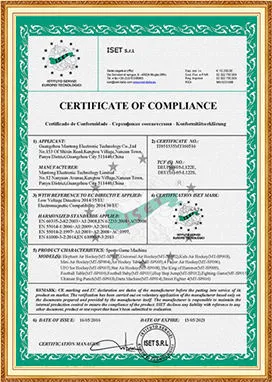
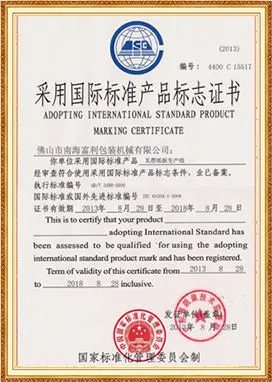
Our Certificate
Our company has advanced technical equipment, rich manufacturing experience, and zero-defect production goals. We have currently obtained multiple certificates and the trust of users at home and abroad.


Ultimate FAQ Guide to Hooks
Q: What is the best metal for hooks?
Q: What are swivel hooks?
Positioning Swivel Hook: These swivel hooks are used so the rigger can rotate the hook to get a properly aligned and secure attachment to the load. It is extremely important to know that positioning swivel hooks are not made to swivel while under load, rather they are designed only to swivel when your rigger needs to align and/or position the hook onto the pick point.
True Swivel Hook with Bearing: These swivel hooks contain a bearing that allows the hook to swivel 360° under load. True swivel hooks are an ideal solution for rigging applications where it is important that the rigging equipment not twist while under load. Like positioning swivel hooks, true swivel hooks allow the rigger to rotate the hook while connecting to the load.
Q: What are Clevis Hooks?
Q: How to use tow hooks?
Once the hooks are mounted onto the frame, an appropriate set of straps is necessary for making a connection and allowing one vehicle to pull the other. There are actually two types of straps used in towing -- tow straps and recovery straps -- and it's important to know the difference between them. Tow straps are designed for, as the name suggests, towing. The straps come with a hook on each end, and they won't stretch. If you're pulling someone out of a rough spot while off-roading, these types of straps are not recommended because of safety issues.
That's what sets them apart from recovery straps, which are the type of straps recommended for pulling out a vehicle that's stuck in the mud. Recovery straps have loops instead of hooks, and they're designed to stretch when pulling another vehicle. They slip right over the towing hooks securely, and when the vehicle doing the pulling starts to move, the recovery strap will stretch. Just like a rubber band or a Slinky, the strap wants to return to its original position when it stretches, so its energy is transferred to the immobile vehicle, pulling it out.
Q: What are the safety concerns with towing hooks?
Q: What are the types and shapes of front tow hooks?
J-hooks are the most common type of tow hook, and they’re named for their J-shaped design. These hooks can be used with any type of tow strap, and they’re easy to attach and remove.
D-rings are another popular type of tow hook, and they’re named for their D-shaped design. These hooks can also be used with any type of tow strap, but they’re not as easy to attach and remove as J-hooks.
No matter what type or shape of tow hook you choose, make sure that it’s compatible with the type of tow strap you’re using. You don’t want to end up in a situation where your hook and strap aren’t compatible!
Q: What are the finishes of front tow hooks?
● Powder-coated finishes are applied as a dry powder, and they provide a thick, durable coating that can resist corrosion and scratches. However, powder-coating can be expensive, and it’s not always available in all colors.
● Plated finishes are applied by dipping the tow hook in a solution and then allowing it to dry. This type of finish is usually less expensive than powder-coating, but it’s not as durable and can be more susceptible to corrosion.
Q: What is a J hook?
Q: What is the difference between an S hook and a J hook?
Q: What are double J-Hooks?
● Motorcycles and sand rails;
● Canoes and Kayaks;
● Welders and medium-sized tool boxes.
Q: What are flat hooks?
Q: What are grab hooks?
Q: What is a swivel hook for?
Q: What are forging hooks?
Q: How much weight can an S hook hold?
We're well-known as one of the leading hook manufacturers and suppliers in China. Please feel free to wholesale customized hook at competitive price from our factory. For more information, contact us now.
Hook, Drag hook, crane hook