

Zelang Machinery: Your Professional Hand Winch/Boat Winch Products Manufacturer
Taizhou Zelang Machinery Co., Ltd. was established in 2004 and is located in Yuhuan, Taizhou, Zhejiang, Donghai City. Since its establishment, our company has been committed to the design, development, and manufacturing of traction tools and hydraulic tools. The main products include wire tighteners, twisters, hand pullers, hydraulic tool accessories, hoist accessories, agricultural machinery accessories, etc.

Our Advantages
Advanced Production Equipment
Our company is equipped with a 3000KV laser cutting machine, 640 CNC lathe, 160T punch press, vertical drill, broaching machine, and other advanced production and processing equipment to ensure the reliability and advancement of products.
Continuous Product Innovation
Our factory continuously upgrades technology, optimizes design, and actively cooperates with users in product design and production. Currently, we have obtained more than 80 patents.
Professional Technical Guidance
During the product manufacturing process, we will fully cooperate with the arrangements for drawing review, product supervision, inspection and acceptance, etc., so that all work before product delivery is orderly.
24-Hour Service
Our company promises to provide 7×24 hours service after the contract is signed. We will respond within 1 hour after receiving the message, provide solutions to general faults within 8 hours, and solve complex problems within 24 hours.


Introduction to Hand Winch/Boat Winch
A hand winch is a tool for moving a load both horizontally and vertically. The load is connected to the hand winch by a steel cable or a synthetic rope. A winch consists of a crank, a transmission, a drum, a cable, a brake and the housing. A boat winch is commonly used for towing and loading a boat. A boat winch is your go-to when loading a boat into the water, as well as getting it back on your trailer. A boat winch can be used for boats big and small, as well as maneuvering jet skis in and out of the water.
Hand Winches vs. Electric Winches: What is the Difference
Hand Winches
Hand winches, also known as manual winches, are powered by manual labor. They have a handle or crank that the operator turns to wind a cable or rope onto a drum. This winding action generates the force needed to lift, pull, or tension the load. Hand winches are commonly used in construction, boating, and off-roading. They can be used to hoist heavy loads, such as construction materials, or to pull a vehicle out of a ditch. Hand winches come in a variety of sizes and styles, and can be used for a wide range of tasks. One of the main advantages of hand winches is that they are relatively inexpensive and can be used in remote locations where an electrical power source is not available. They are also easy to maintain and repair.
Electric winches
Electric winches, on the other hand, are powered by an electric motor. These winches offer the advantage of being able to generate greater power and speed than hand winches, and can be operated with the push of a button. Electric winches are commonly used in industrial settings, such as in manufacturing and construction, as well as in recreational applications like off-roading and boating. They can be used to lift heavy loads, such as cars or heavy machinery, and can be operated at a faster speed. One of the main advantages of electric winches is that they are more powerful and faster than hand winches. They also require less manual labor to operate, which can save time and energy.
Advantages of Hand Winch/Boat Winch
Hand Winch
No Electricity Requirement
Let us start with the obvious one. Hand winches do not require the added assistance of electricity which is a huge benefit for industries that face challenges in providing a 24x7 supply of electricity. The constant power supply also brings in additional charges. This kind of issue gets nullified in the case of hand winches. They do not need a constant power supply, and hence in case of power cuts, the operation is not hindered and carried on with the help of hand winches.
Portability
Hand winches have the advantage of portability which electric winches are devoid of. In many industrial and domestic applications, we face a situation where we need to move the winch from one place to another to facilitate operations. In such cases, the hand winch reigns supreme over the electric counterpart as it is portable and easy to locate.
Cost-Effective
Cost is always a significant subject irrespective of the size of the industry. Electric winches are heavier on our pockets than manual ones. Many industries that have a restrained budget choose hand winches over electrical ones due to this reason. And as described earlier electric winches consume power continuously which make them even more costly for execution. Leading hand winch manufacturers like us provide multi-faceted hand winches that are equally productive yet more cost-efficient.
Easier Repair and Maintenance
Every piece of machinery or equipment comes with an added baggage of maintenance and repair. These aspects are very crucial in the overall operability and quality of performance of the equipment. The same applies to winches as well. Manual winches are very easy on maintenance as compared to electric ones. According to leading manufacturers, they are easily repairable as well. This is mainly because of the absence of electric parts on hand winches. Electric winches are associated with more parts which increase the chances of breakage, which in turn requires repairs. Maintenance work is also required more for a piece of electrical equipment as compared to a piece of hand equipment. Hence the added advantage of the ease of repair and maintenance is another vital aspect that tilts the pointer towards hand winches more than electric ones.
Boat Winch
Efficient Retrieval
Boat winches are designed to provide efficient retrieval of boats and other watercraft. They use mechanical power, such as electric motors or manual cranking mechanisms, to pull in the boat or anchor, reducing the effort and time required for retrieval.
Increased Safety
A boat winch enhances safety during boat launching and retrieval operations. It allows for controlled and precise movement, minimizing the risk of accidents, injuries, or damage to the boat or surrounding structures. The winch's braking system provides additional security by preventing unexpected slippage or uncontrolled movements.
Versatility
Boat winches are versatile and can be used for various purposes. They can be utilized to launch and retrieve boats, raise and lower anchors, load and unload equipment, and assist in docking operations. This versatility makes them essential equipment for boating, fishing, and other water-based activities.
Ease of Use
Boat winches are designed for user-friendly operation. Electric winches often feature remote control systems, allowing the operator to control the winching operation from a safe and convenient location. Manual winches are also straightforward to operate, typically requiring a simple cranking motion.

Application of Hand Winch/Boat Winch
Towing Automobiles
You may have already seen a winch in action on the back of a tow truck. With a winch installed on your automobile, you’ll be able to accomplish similar tasks yourself. These winches can be used to free a stuck car, whether it’s the car equipped with the winch or another vehicle that needs rescuing. They can bring smaller vehicles onto trailer beds for easy transport. You’ll also be able to drag trailers and shift boulders using an automobile-mounted winch.
Raising Anchors, Loading Cargo, and Providing Support
The winches for ships are usually of the industrial variety, larger than the winches on cars or ATVs. Crank winches can be found on older ships, being used to raise or lower sail, move a mast, or raise the anchor. These often require much manpower. Meanwhile, an electric winch can bring cargo onto a ship’s deck or to lift the heavier anchors of tankers or industrial vessels. Winches are also used on tugboats and offshore support vessels, which need these devices for heavy tasks such as pulling larger ships and towing hydrophones.
Docking Small Boats
While ships will do fine if left anchored at bay, smaller boats may have to be taken out of the water to prevent the growth of barnacles and algae. This also protects them from being damaged by floating debris and other impacts. A winch can help you with this by pulling your boat to the dock easily. You can also use winches on personal watercraft, such as jet skis, to bring them ashore at the end of the day.
Moving Heavy Equipment
Do you need to move generator sets or HVAC equipment around, or pull a brand new motor into position? You can reposition such equipment more easily if you use a winch. Some specially designed dual-purpose winches can switch between modes when they need to move personnel on suspended cradles or platforms instead.
Working Principle of Hand Winch/Boat Winch
The Basics of Winch Machines
Let’s start with the basics. Winches consist of a spool of rope or cable attached to a hand crank or motor. When this crank or motor is turned, the spool winds around it, applying a pulling force to whatever object is attached to the other end. This force can be used to lift heavy objects, tow vehicles, or perform other tasks that are otherwise impossible. All winches operate using variations of the abovementioned concept. Typically, the elements that will differ are the method with which the motor is powered and the spool is turned. Common examples of this include air winches, diesel winches, electric winches and hydraulic winches. While each of these utilises alternative methods of power or force generation, the fundamentals remain the same; a spool is turned which winds the cable.
A Little Physics
The physics behind a winch is relatively simple. When the crank or motor is turned, torque is applied to the spool of rope or cable, causing it to wind around itself. As the spool or drum rotates, the tension of the rope or cable increases; this tension is then transferred to the object that is attached to the other end of the rope or cable, providing the power that is used to lift or move the object. The greater the tension in the rope or cable, the greater the force that is applied to the object, and the easier it will be to lift.
Speed & Power
Many winches will feature variable speed control which, as the name suggests, allows the user to adjust the output speed of the motor. As is the case with most machinery of this kind, speed and power are inversely related. In other words, the more power you need, the lower the speed setting you should use. Likewise, higher speeds are suitable for lighter loads.
Maintenance Tips for Hand Winch/Boat Winch
Inspect Your Rope
Whether you’re using synthetic rope or steel cable, winch cable maintenance is important to ensure no fraying or barbs in the line. A damaged line on your winch can be dangerous, so you must check it regularly to make sure it is still safe for use.
Wash Your Line
Though steel winch cable maintenance mainly involves checking for rust, frays or burrs in your line, synthetic rope requires a little more attention to ensure it stays in the best possible condition. Synthetic winch rope maintenance requires you to unspool your line, wash, and dry it, which is a good way to avoid any decay or damage in the future.
Check Your Battery Terminals
Without power, a winch is not worth its weight in anything, so you need to make sure your battery is still in good enough condition to operate the winch. Check the terminals for any corrosion that could lead to your battery not working so that you’ve always got the power you need.
Tighten Your Fixtures
When you’re a tough mudder, it is only natural for some fixtures to come loose over time. As part of your seasonal inspection, it’s good to ensure that all the fixtures on your winch are properly and tightly fastened, avoiding unforeseen mishaps on your next trip.
Choosing the Right Winch: Key Questions
What's the weight of the maximum load you intend to pull?
You'll need a winch that's rated for about one-and-a-half times that weight, because the pulling power of a winch diminishes as its cable winds onto the drum.
How frequently will you be using the winch?
Extended-use winches are designed to withstand periods of longer operation, which is important if winching is a routine part of your work.
Will you be using the winch for pulling only? Or do you need equipment that can lift as well as pull?
Winches designed for lifting have brakes that allow them to hold their loads in position. Winches designed only for pulling don't have brakes to safely hold suspended loads.
How will you power the winch?
DC-powered winches can run from a vehicle battery, while AC-powered winches plug into an outlet. There are also portable winches that have their own batteries. And hand-powered winches can work for some jobs.
Will you be using the winch in a hard environment?
Some manual winches are fully encased, which helps prevent debris from jamming them.
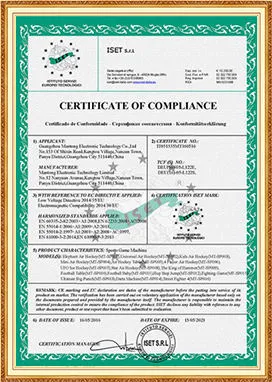
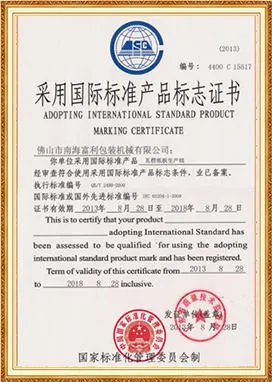
Our Certificate
Our company has advanced technical equipment, rich manufacturing experience, and zero-defect production goals. We have currently obtained multiple certificates and the trust of users at home and abroad.


Ultimate FAQ Guide to Hand Winch/Boat Winch
Q: What is the function of a winch?
Q: What is the purpose of a winch on a ship?
Q: Which boat winch do I need?
Q: Winch vs. Hoist: What's the difference?
Q: What winch size do I need?
Q: What is the rpm of a winch?
Q: How can I increase my winch speed?
Q: How does winch use the principle of leverage?
Q: What are electric winches?
Q: What are hand winches?
Q: Why should you choose hand winches over electric winches?
Q: What is the use of manual winch?
Q: What is the difference between manual and electric winch?
Q: Are hand winches safe?
Q: How useful is a winch?
Q: How much can a manual winch pull?
Q: What is a hand operated winch?
Q: Which winch is safer?
Q: Is rope or cable better on a winch?
Q: What are the safety rules for winches?
We're well-known as one of the leading hand winch/boat winch manufacturers and suppliers in China. Please feel free to wholesale customized hand winch/boat winch at competitive price from our factory. For more information, contact us now.
Automatic Brake Hand Winch, Worm Gear Winch Self Locking, Worm Gear Winch with Loop Ceiling Mounted Winch