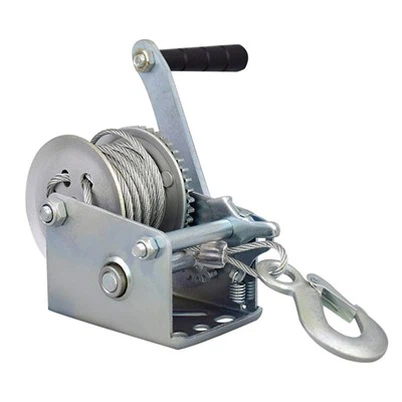
What is the magnetic property of the components in a Hand Puller with Cable?
Leave a message

Hey there! As a supplier of Hand Pullers with Cable, I've been getting a lot of questions about the magnetic properties of the components in these handy tools. So, I thought I'd take a deep dive into this topic and share what I've learned.
First off, let's talk about what a Hand Puller with Cable is. It's a versatile tool used in a variety of industries, from cargo control to construction. You can check out our range of Hand Puller with Cable on our website. These pullers are designed to provide a reliable and efficient way to pull, lift, or secure heavy loads.
Now, onto the magnetic properties. The components of a Hand Puller with Cable are typically made from different materials, each with its own magnetic characteristics. The main parts we'll focus on are the cable, the hooks, and the body of the puller.
The Cable
The cable in a Hand Puller is usually made of steel. Steel is an alloy that contains iron, and iron is ferromagnetic, which means it can be magnetized and is strongly attracted to magnets. However, not all steel cables are equally magnetic. The magnetic properties of the cable depend on the specific type of steel used and its heat treatment.
For example, stainless steel cables come in different grades. Some grades, like 304 and 316 stainless steel, are austenitic, which means they have a crystal structure that makes them non - magnetic or only slightly magnetic. These types of stainless steel are often used in applications where corrosion resistance is crucial, such as in marine environments.
On the other hand, carbon steel cables are highly magnetic. Carbon steel contains a higher percentage of carbon, which gives it greater strength and a more magnetic nature. In a Hand Puller with Cable, a carbon steel cable is often preferred for its strength and magnetic properties, which can be useful in certain applications. For instance, if you're working in an environment where you need to use magnetic sensors to detect the position of the cable, a magnetic carbon steel cable would be ideal.
The Hooks
The hooks on a Hand Puller are also important components. They are usually made of forged steel. Similar to the cable, the magnetic properties of the hooks depend on the type of steel used. Most forged steel hooks are magnetic because they contain a significant amount of iron.

The magnetic nature of the hooks can be an advantage in some situations. For example, if you're working in a workshop where there are a lot of metal parts lying around, the magnetic hooks can attract small metal debris. This can be both a good and a bad thing. On one hand, it can help keep the work area clean by picking up loose metal bits. On the other hand, if the debris accumulates on the hooks, it can affect their performance and safety.
The Body of the Puller
The body of the Hand Puller is typically made of cast iron or steel. Cast iron is a type of iron - carbon alloy that is known for its high strength and durability. It is also ferromagnetic, so it is strongly magnetic.
The magnetic property of the puller's body can be useful for mounting the tool in certain applications. For example, if you have a magnetic workbench, you can easily attach the Hand Puller to it, which can make your work more convenient. However, it can also be a drawback in some cases. If you're working in an environment where there are a lot of magnetic fields, the puller's body might be affected by external magnetic forces, which could potentially interfere with its operation.
Why Does It Matter?
You might be wondering why the magnetic properties of these components matter. Well, there are several reasons.
In terms of safety, the magnetic properties can affect how the Hand Puller interacts with its surroundings. For example, if you're working near sensitive electronic equipment, a magnetic Hand Puller could potentially interfere with the operation of the equipment. On the other hand, in some industrial settings, the magnetic properties can be used to your advantage. For instance, in a scrap metal yard, a magnetic Hand Puller can be used to easily pick up and move metal scraps.
From a manufacturing perspective, the magnetic properties of the components can also influence the production process. For example, during the assembly of the Hand Puller, magnetic components can be easily aligned and held in place using magnets, which can improve the efficiency of the manufacturing process.
Other Types of Hand Pullers
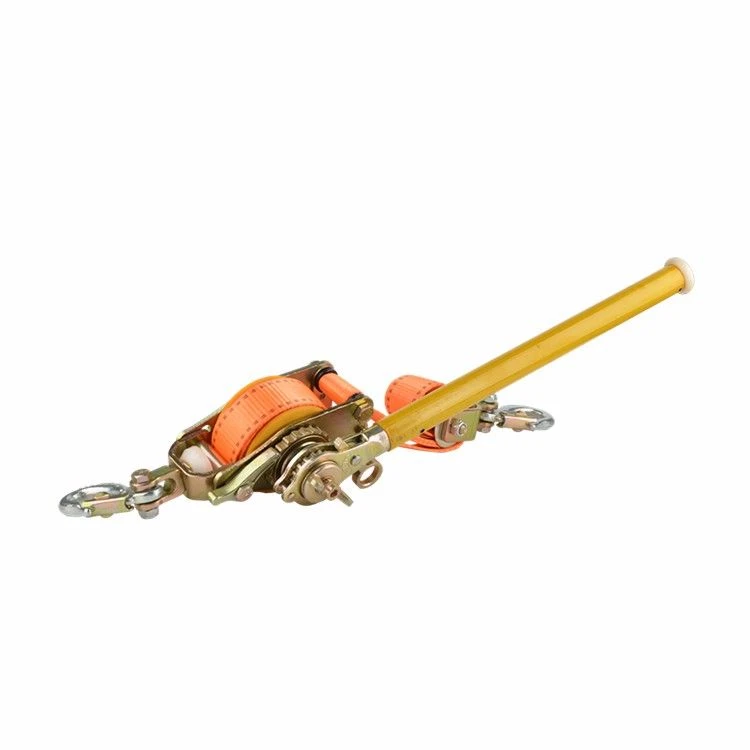
We also offer Portable Hand Puller and Hand Puller with Belt. The magnetic properties of these pullers' components are also worth considering.
In a Portable Hand Puller, the materials used for the components might be different from those in a Hand Puller with Cable. For example, the body might be made of a lighter - weight alloy, which could have different magnetic properties. Similarly, in a Hand Puller with Belt, the belt is usually made of non - magnetic materials like nylon or polyester, but the metal parts, such as the buckles and hooks, will have magnetic properties similar to those in a Hand Puller with Cable.
Conclusion
In conclusion, the magnetic properties of the components in a Hand Puller with Cable are an important factor to consider. The cable, hooks, and body of the puller can all have different magnetic characteristics depending on the materials used. Whether you're using the Hand Puller in a workshop, a construction site, or a marine environment, understanding these magnetic properties can help you choose the right tool for the job and ensure its safe and efficient operation.
If you're interested in learning more about our Hand Pullers with Cable or have any questions about the magnetic properties of our products, feel free to reach out. We're always happy to help you find the best solution for your needs. Whether you're a small business owner looking for a reliable cargo control tool or a large construction company in need of heavy - duty equipment, we've got you covered. So, don't hesitate to contact us for more information and to start a procurement discussion.
References
- "Magnetism and Magnetic Materials" by David Jiles
- "Materials Science and Engineering: An Introduction" by William D. Callister Jr. and David G. Rethwisch