


3 Inch Tie Down
A Tie Down Strap is a type of strap or belt designed for securing and fastening objects in place. It is commonly used for various purposes, including securing cargo during transportation. These straps typically consist of a strong, durable material, such as nylon or polyester, and include mechanisms for tightening and releasing the strap.
Description
Zelang Machinery: Your Professional Tie Down Manufacturer
Taizhou Zelang Machinery Co., Ltd. was established in 2004 and is located in Yuhuan, Taizhou, Zhejiang, Donghai City. Since its establishment, our company has been committed to the design, development, and manufacturing of traction tools and hydraulic tools. The main products include wire tighteners, twisters, hand pullers, hydraulic tool accessories, hoist accessories, agricultural machinery accessories, etc.

Our Advantages
Advanced Production Equipment
Our company is equipped with a 3000KV laser cutting machine, 640 CNC lathe, 160T punch press, vertical drill, broaching machine, and other advanced production and processing equipment to ensure the reliability and advancement of products.
Continuous Product Innovation
Our factory continuously upgrades technology, optimizes design, and actively cooperates with users in product design and production. Currently, we have obtained more than 80 patents.
Professional Technical Guidance
During the product manufacturing process, we will fully cooperate with the arrangements for drawing review, product supervision, inspection and acceptance, etc., so that all work before product delivery is orderly.
24-Hour Service
Our company promises to provide 7×24 hours service after the contract is signed. We will respond within 1 hour after receiving the message, provide solutions to general faults within 8 hours, and solve complex problems within 24 hours.
Tie Downs for Sale Display

3 Inch Tie Downs provide excellent lashing performance. The tool's large size and high-quality materials enable it to withstand high tensile forces. This means it can powerfully tie items of different sizes and types, ensuring they don't shift or get damaged during transportation or storage.

The 2 Inch Tie Down is a tool used to secure items, often used for transporting items and cargo. They are woven from high-strength nylon or polyester fibers and have enough durability and strength to ensure the safety of items during transportation.

1.5 Inch Tie Down has a wide range of applications in many different transportation and logistics scenarios. For example, in trucking, they are often used to tie down heavy objects. Likewise, they are often used in sea transport, rail transport, and air transport to ensure that goods are not damaged or lost during transportation.

1 Inch Tie Down is mainly used to secure and tie various items, such as cargo, luggage, wood, pipes, machines, etc. Its function is similar to a traditional rope or belt, but it is more convenient and practical because of its low elasticity, lightness, ease of use, and simple structure.

Introduction to Tie Down
A Tie Down Strap is a type of strap or belt designed for securing and fastening objects in place. It is commonly used for various purposes, including securing cargo during transportation. These straps typically consist of a strong, durable material, such as nylon or polyester, and include mechanisms for tightening and releasing the strap.
Reliable
The webbing used in ratchet straps is typically made of polyester because of its high strength, resistance to the elements, lack of abrasion, and low stretchability. It ensures that the cargo will be safely tightened without any damage and can be transported in a wide range of weather conditions.
A Range of Measurements
It makes no difference if your circumstance is mild or severe (like securing your load to a roof rack, for example). Ratchet straps are available in appropriate mini versions, and their strength ratings can go as high as 1,500 kilograms. It is possible to purchase ratchet straps with a length of up to 20 meters and a load capacity of up to 10,000 kilograms to be used for more extensive applications.
Effortless
When it comes to tightening the load and ensuring that everything is secure, these tie-down straps, which feature a ratcheting system, provide you with a mechanical advantage so that you can do so more quickly. In addition, they make loading and unloading large and cumbersome cargo simpler, quicker, and less labor intensive by eliminating the need for a large number of people.
Secure Fastening
Tie down straps provide a reliable and secure method for fastening objects, ensuring that they remain in place during transportation or other activities. This is crucial for preventing shifting, movement, or potential damage to the secured items.
Versatility
Tie down straps are versatile and can be used in a wide range of situations. Whether securing cargo on a truck, trailer, roof rack, or for other purposes, these straps can be adapted to different applications.
Adjustability
Tie down straps are often adjustable in length, allowing users to accommodate different sizes and shapes of objects. This adaptability makes them suitable for securing various loads.
Application of Tie Down


Cargo Securement
The most common use for Ratchet Straps by far has to be by using Ratchet Straps to secure cargo. No matter if the load is in the back of a pickup truck or big rig trailer there is no job too big for a Ratchet Strap. Cargo securement has come a long way in the last 50 years and is constantly being researched by the Department of Transportation to remain safe and keeping cargo secured. Ratchet Straps have been deemed as one of the most popular ways to keep loads secured and prevent moving from occurring to prevent accidents from occurring.
Slackline
Slackline takes the strength of the Ratchet Strap that allows cargo to be secured and is tightened to traditionally a tree. When secured the slackline removes slack and becomes similar to a tightrope. Allowing for a fun family activity with friends, family, or even coworkers. Try it out for yourself!
In the Back of a Pickup Truck
Ratchet straps are mostly used for cargo, but did you know you can even use ratchet straps to loop through grocery bags to secure them in the back of a pickup truck to prevent blowing away and movement from occurring? This is one of our favorite DIY ratchet strap hacks that can make grocery shopping more enjoyable.
Professional Trucking
Next time you are on the highway going down the road keep an eye out for how many flatbeds, pickup trucks with trailers, and other shippers who are using ratchet straps. It's the number one most preferred cargo securement tool in the professional trucking and shipping industry due to its great cargo securement.
Professional Movers
Nothing goes better with professional movers as a tool like ratchet straps that makes the job much easier than it can be without. Keep your clients happy by preventing load shifts, tight cargo securement, as well as utilizing trailer space. This goes perfectly along with products such as moving blankets, packers tape, and other moving supplies.
ATVs
ATVs are the perfect weekend warrior getaway that you need. No matter if you plan on riding around a campground, an off-road muddy trail, or if you intend on even racing ATVs with friends then you need a reliable tie down that you can trust to get the job done right.
Using Tips for Tie Down
Releasing and opening the ratchet strap is the first step in using a ratchet strap. Pressing down on the release catch and raising the ratchet, you can do this. A slot should now be open on the ratchet's front, making it possible to feed the webbing strap into the mechanism.
On the bottom of the ratchet, the webbing that makes up the other side of the ratchet strap should now be fed through the slot. You should be able to hold the end and pull it the rest of the way through once the webbing has been fed through into the ratchet mechanism, making this move considerably easier.
The hooks should be firmly attached to their anchor points on the other ends of the ratchet load straps, providing the grip required to hold the ratchet straps tightly secured during transit. Tie down straps are extremely useful for moving companies.
Once the hooks are safe, by opening and closing the ratchet repeatedly, you can start removing the slack from the load strap line-crank the ratchet. The mechanism will pick up the slack, tension the line, and ensure that the cargo has no movement capacity. Close the ratchet and keep it closed and locked until the line is tight enough. Check that the cargo is safe and that before setting off, the lines are taut and completely fixed to their moorings!
You can unlock the ratchet load strap at your destination by pushing down on the release catch and opening the ratchet. Make sure that the release catch is pressed down, or the ratchet won't release the webbing! This is yet another failure to ensure the best possible protection in transit, meaning that even though the ratchet somehow comes open, it will not release the freight until an operator pushes the release catch.
Factors to Consider Before Choosing a Tie Down
How Much Weight They Can Handle
You have to pay attention to how much your cargo weighs because if you give the tie-down straps more weight than they can handle, there is a high probability that they will snap on you during use. Each strap has what is known as the Working Load Limit (WLL), and this is what determines how much weight is safe enough for the strap to hold. What you need to do when purchasing tie-down straps is make sure that the maximum weight of your cargo is not greater than the combined WLL of the tie-down straps. This means that if your load is 1000lbs, and you purchase two straps, their combined WLL should be greater than 1000lbs.
Length of Straps
Length is also another important factor because if you get tie-down straps that are too short, they will not be able to go over your cargo and you will fail to secure it at all. And if you get straps that are too long, the remaining portion of the strap will be loose, becoming major hindrance during transportation. But even if the tie-down strap lengths you are finding are too long, all hope is not lost, since manufacturers have found a way to deal with the loose ends through housings and wrappers. The housing option is found on retractable ratchet straps and is used to reel in the loose ends as you tighten the strap.
Tightening Methods
When tightening cargo to your transportation vehicle, there will be some sort of mechanism that will be used to provide you with a mechanical advantage in securing the cargo. This could be in a form of the buckle or ratcheting system. You should consider the following types when looking for a tie-down strapping:
● Cum Buckle Straps: With these straps, there will be a buckle with a thumb release that you press while feeding it the strap and pulling it until it is tight enough. When you release your thumb, the buckle's "teeth" will "bite" on the strap and prevent it from moving.
● Ratchet Straps: These provide you with a better mechanical advantage by giving you leverage when tightening your cargo. They come with a ratcheting assembly on one end that opens up. When it is open, you insert the other end of the strap and close it. After that, you use a lever to fasten the strap to your liking.
● Retractable Ratchet Straps: These are the same as any other ratchet strap but provide a better way to deal with remaining unused strap by containing it inside a housing.
● Truck Tie-Down Winch Straps: Winch straps are ideal for heavy-duty applications, especially when trucking is involved. One end of the strap is fitted with a hook, and you attach the hook to the truck's anchor point. The other end is then winched using some kind of winching system.
The Types of Hooks they Use
Each vehicle has a different type of tie-down point, which is an anchor where you attach the hook of the strap. When choosing tie-down straps, you also need to know what type of hook will work for your vehicle.
● S-hooks and J-hooks: These can be secured to flatbed anchor points or thin metals areas of trailers or car bumpers.
● Flat Hooks: These work well for flat anchor points that are thin like the edges of an angle iron, square stock or bumper.
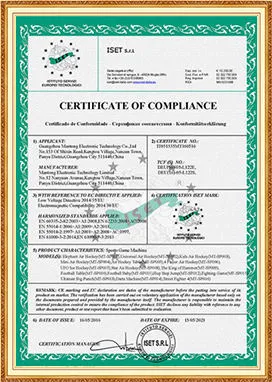
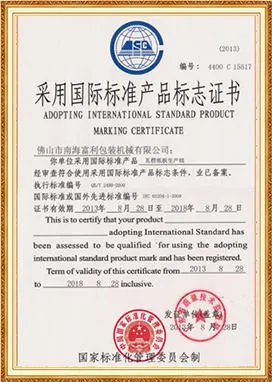
Our Certificate
Our company has advanced technical equipment, rich manufacturing experience, and zero-defect production goals. We have currently obtained multiple certificates and the trust of users at home and abroad.


Ultimate FAQ Guide to Tie Down
Q: What are tie down straps? What are they used for?
Q: What are the types of straps?
Q: How to thread a ratchet strap?
● Open the handle
● Insert the loose end of the of the strap into the mandrel
● Double it back over and pull the strap through the slot in the mandrel
● Pull strap to remove excess slack
● Crank the ratchet to desired tension
● Make sure the strap stays in line with the other strap to avoid tangling/locking
● Lock handle down after tightening
Q: How much force does a ratchet strap have?
Q: What is a ratchet strap used for?
Q: What is a ratchet strap?
Q: What is a ratchet strap?
Q: Why would you need a ratchet strap?
Q: Are you allowed to lift anything with tie downs?
Q: Is there an expiration date for tie downs?
Q: Do the different colors of tie downs have anything to do with the pretensioning force?
Q: What is an unsecured load vs. a secured load?
Q: If i drive slowly, do i still need pickup truck tie downs?
Q: Really heavy loads don't need to be secured with tie downs, right?
Q: How to maintain tie downs?
The sun's ultraviolet rays break down both nylon and polyester fibers. This is what causes ratchet straps to discolor and become brittle. It is best to keep straps out of the sun when they are not in use. For our money, the best way to go is to either store your ratchet straps in an exterior toolbox or somewhere in the back of your cab. Note that the sun will eventually damage webbing material to the point of reducing its strength. Keep an eye on discoloration as the first signal. When a strap looks unusually pale, be extra vigilant in your visual inspections. Webbing material that has lost almost all its color is probably on its way out.
● Don't Store Wet Straps
Mold and mildew are never a truck driver's friends. They are especially damaging to ratchet straps inasmuch as mold and mildew can weaken fibers over time. Therefore, treat your ratchet straps the same way you treat your tarps in terms of moisture. Never store a wet strap except in an emergency situation. Instead, let it thoroughly dry before putting it away. If you do end up with mold on a strap, do not use a chlorine-based product to clean it. Use a product that is friendly to the webbing material the strap is made of.
● Remove Webbing from Handles
When taking ratchet straps out of use, be sure to remove the webbing from the handles. This prevents the webbing from getting too tightly wrapped around the spindle or catching on the teeth of the ratchet. You'll find that your ratchet straps last a lot longer just by following this one simple tip.
● Wrap Webbing Around the Ratchet
With webbing removed from the handle, we recommend wrapping it entirely around the ratchet and securing it with a rubber band. This protects the ratchet from road vibration while also keeping everything in your toolbox neat and tidy.
● Lubricate the Ratchets
Finally, be sure to lubricate your ratchets with a dry silicone spray or industrial lubricating oil. Whatever your lubricant of choice, use it carefully and sparingly. Do your best to avoid allowing lubricant to come in contact with strap webbing. As always, thoroughly inspect ratchet straps as you are tying down your load. If you ever question the integrity of a strap or ratchet, don't use it. You are better off being safe than sorry. Remember that it only takes one failure to create big problems. Those are problems you do not need.
Q: Can a ratchet strap pull a car?
Q: Can you reuse ratchet straps?
Q: Why do my tie down straps keep coming loose?
Q: What not to do with a ratchet strap?
● Twisting, kinking or knotting the ratchet strap. Exposing ratchet straps to damaging acids or alkalis.
Q: When should a ratchet strap be replaced?
Hot Tags: 3 inch tie down, China 3 inch tie down manufacturers, suppliers, factory, 3 Inch Tie Down, 2 Inch Tie Down, 1 5 Inch Tie Down, Tie Down, 1 Inch Tie Down
Send Inquiry
You Might Also Like


